
Super funds
HESTA
Investing your retirement savings in climate destruction
HESTA is an industry superannuation fund for the health and community services sectors, managing nearly $100 billion on behalf of more than one million members.
HESTA has long portrayed itself as a climate leader, claiming to be a “gutsy advocate for a fair and healthy community.”
Yet HESTA has billions of dollars of its members’ retirement savings invested in companies with coal, oil and gas expansion plans, a major threat to a stable climate and the ‘healthy community’ HESTA claims to be advocating for.
HESTA has committed to the goal of achieving net zero emissions in its investment portfolio by 2050 and endorses the climate goals of the Paris Agreement. Climate science is clear that achieving these goals means no new or expanded fossil fuel projects can go ahead.
While HESTA remains invested in companies undermining global climate goals by expanding fossil fuels, members will call out their fund’s greenwash.
HESTA must take a clear stance against new fossil fuel developments, which are incompatible with its climate commitments.
Join the movement: Tell HESTA to end its financial support for new fossil fuels!
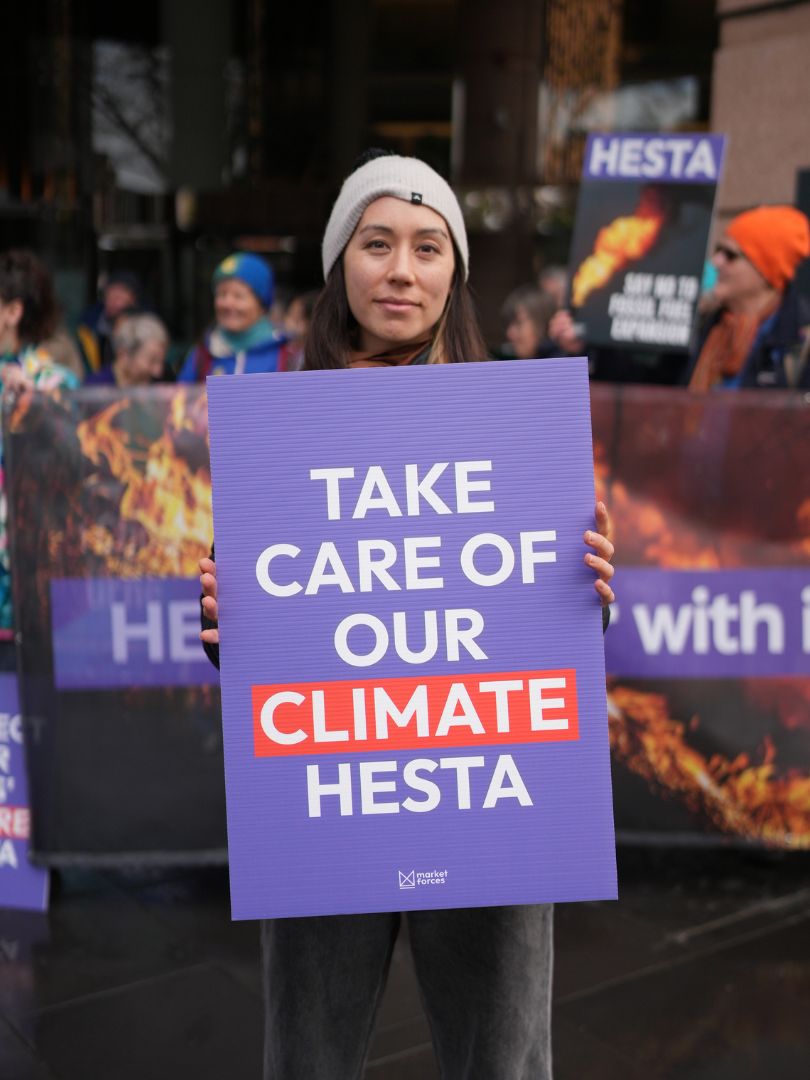
Join the movement
Join other HESTA members calling on the fund to end its financial support for coal, oil and gas expansion.
Climate science is clear that every fraction of a degree of global warming matters, with higher warming scenarios posing an exponentially greater threat to a stable climate, a stable economy and therefore super fund members’ returns. A 2025 study of Australian super funds projected member returns to decline 46% by 2050 under a high warming scenario.
Failing to rein in emissions in line with global climate goals not only puts the retirement savings of HESTA’s members at risk, but also poses a significant threat to human health.
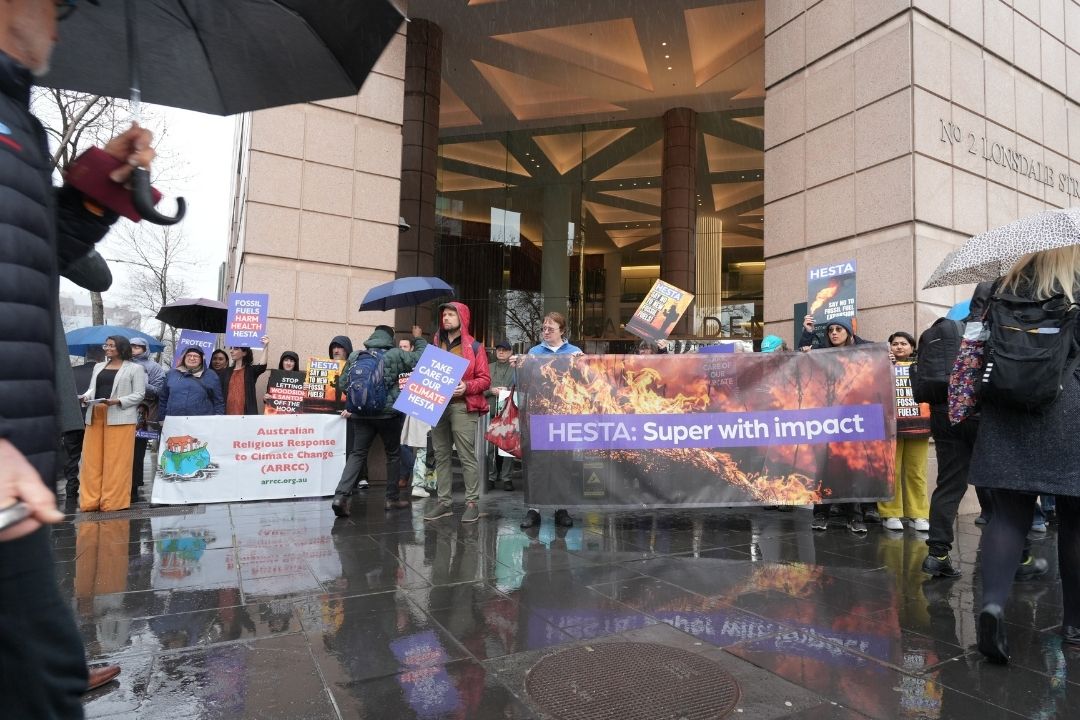
HESTA members and allies rally outside the fund’s Melbourne office in 2025.
Climate change: the biggest threat to global health
As a key super fund for the health and community services sectors, many of HESTA’s members are on the frontlines of climate change-induced disasters. More extreme heatwaves, floods and bushfires – fuelled by pollution from burning coal, oil and gas – pose an ever growing threat to the health of communities in Australia and all over the world.
“Climate change is the greatest global health threat facing the world in the 21st century.”
– The Lancet Countdown on health and climate change
The Lancet medical journal refers to climate change as the “greatest global health threat facing the world in the 21st century.” Its 2024 Countdown on health and climate change report found that people around the world are facing “record-breaking threats to their wellbeing, health, and survival” and calls for fossil fuel funding to be redirected to “support a just transition and healthier, more resilient populations.”
While HESTA’s members contend with the growing health threats posed by climate change, their super fund continues to invest in companies with significant coal, oil and gas expansion plans, failing to hold them accountable for these plans.
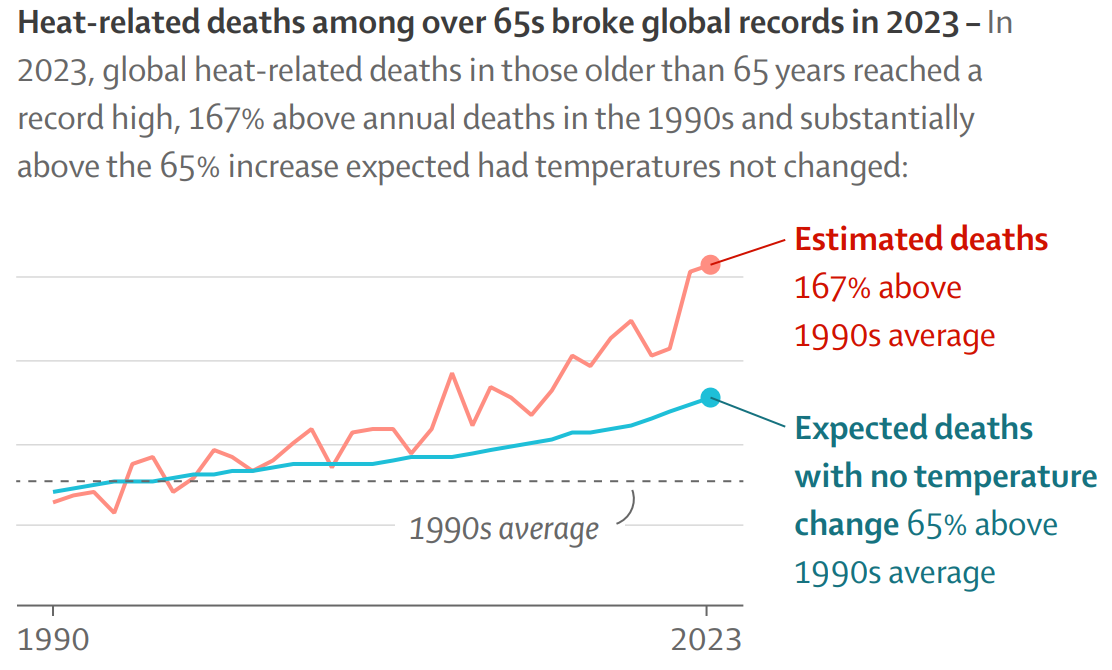
The World Health Organization conservatively estimates that climate change will cause an additional 250,000 deaths per year globally between 2030 and 2050, due to “undernutrition, malaria, diarrhoea and heat stress alone.”
In Australia, people are highly vulnerable to climate extremes which places a large burden on the healthcare system. Research has found that extreme weather events such as the 2019-20 ‘Black Summer’ bushfires and subsequent record flooding overwhelmed emergency management and healthcare systems, leading to “…considerable acute and chronic health impacts and deaths.”
A report from the Climate Council concluded that climate change is taking a significant toll on the mental health of Australians. The Climate Council conducted a national poll of over 2,000 people, finding that 51% of Australians who have experienced a climate change-fuelled disaster since 2019 have reported an impact on their mental health.
“The 2020 heatwave and bushfires were some of the worst and most difficult times for us working in mental health. People don’t know that most of the spikes and presentations to hospital departments are actually from people having acute mental health problems from heatwaves. And the bushfire smoke.”
The worst impacts of climate change and their devastating effects on global health are avoidable if we take urgent action to reduce emissions. Transitioning to a clean, renewable energy-powered economy begins with ending the expansion of the fossil fuel sector and reducing our reliance on coal, oil and gas in line with global climate goals.
With a membership base consisting of healthcare professionals increasingly burdened with the health impacts of climate change, HESTA has a clear imperative to stand up for these members by taking a strong position against new and expanded fossil fuel projects.

HESTA’s investments in Australia’s biggest oil and gas companies
Woodside and Santos are Australia’s two largest oil and gas companies. Both of them have massive oil and gas expansion plans, threatening billions of tonnes of pollution and undermining global climate goals. HESTA invests its members’ retirement savings in both of these companies.
Based on HESTA’s disclosures, the fund had more than $388 million invested in Woodside and more than $157 million invested in Santos at 31 December 2024. This makes HESTA a big shareholder in both of these companies.
Investing members’ retirement savings in Woodside and Santos means HESTA could be using its influence as a shareholder in these companies to advocate for an end to new fossil fuel production. Yet instead of using its position as a shareholder in Woodside and Santos to demand and deliver an end to their oil and gas expansion plans, the fund continues to undermine its stated support for global climate goals by failing to do this.
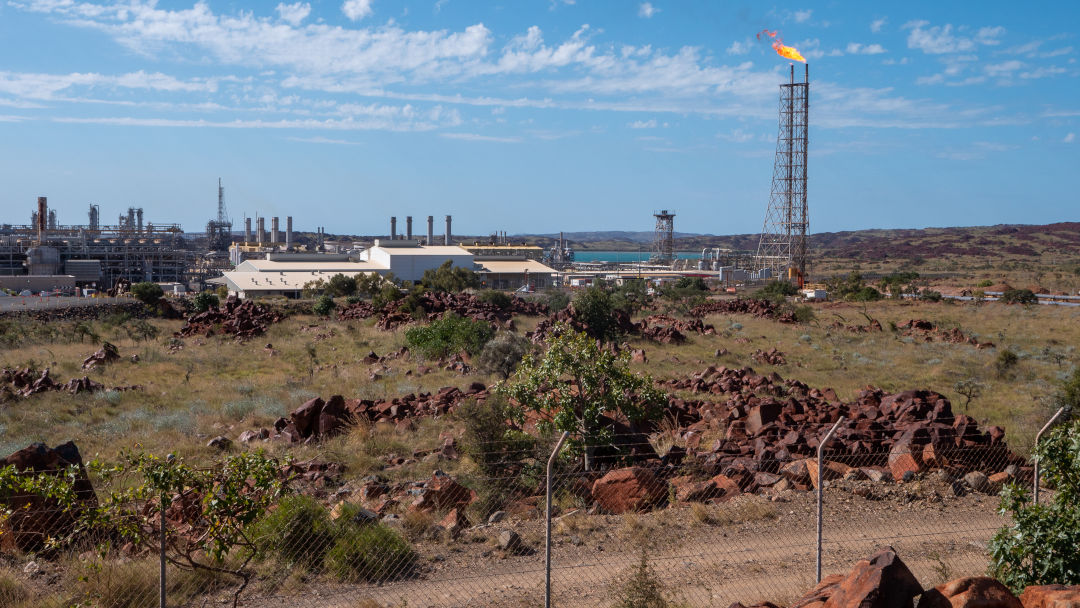
Woodside’s North West Shelf gas processing facility. Image credit: The Conservation Council of Western Australia.
Beyond posing a threat to our climate, Woodside and Santos’ oil and gas expansion plans also pose a threat to Indigenous cultural heritage and are strongly opposed by community members including Traditional Custodians. For example, industrial emissions from Woodside’s North West Shelf gas processing facility threaten to accelerate the degradation of the Murujuga rock art, a more than 40,000 year-old collection of petroglyphs containing Indigenous cultural and spiritual knowledge.
Woodside’s disregard for Indigenous cultural heritage has been dubbed “Juukan Gorge in slow motion,” a reference to Rio Tinto’s destruction of the 46,000 year-old rock shelters in Western Australia’s Pilbara region.
Staying silent on fossil fuel expansion while emissions continue to grow
In September 2022, HESTA asked Woodside and Santos to demonstrate how their business plans, including final investment decisions on major projects, align with a 1.5°C emissions reduction scenario. Since then, Woodside has taken its final investment decision on two new climate-wrecking projects – the Trion oil field and Louisiana LNG (Liquefied Natural Gas) export facility – while Santos has continued progressing its oil and gas growth plans.
Both Woodside and Santos’ plans to significantly increase production could see climate pollution skyrocket, particularly when compared with the global decline in oil and gas production consistent with a 1.5°C emissions reduction scenario. This means that neither company has made any material progress towards aligning with a credible 1.5°C scenario since HESTA put them on notice in 2022. In fact, both companies are aiming their businesses in the opposite direction to the climate goals of the Paris agreement by barrelling ahead with new oil and gas projects!
For years, HESTA has pushed back on member demands for divestment from companies like Woodside and Santos, claiming that the fund can “influence real change” by remaining invested in these climate wreckers. But instead of using its influence to demand an end to Woodside and Santos’ new oil and gas projects – in line with its stated expectations of these companies – HESTA continues to stay silent as both companies progress their oil and gas expansion plans.
HESTA's shareholder voting at Woodside and Santos
Being a shareholder in Woodside and Santos affords HESTA voting rights at these companies’ annual general meetings (AGMs). One way in which HESTA’s ‘influence’ has been failing its members is the consistency of its shareholder voting activities.
HESTA has taken some positive steps in recent years by voting for climate-related shareholder proposals put to these companies and against the re-election of some key company directors on climate grounds. Yet after voting against the re-election of Santos’ board Chair at the company’s 2024 AGM, HESTA backed off pressure by voting in favour of Santos’ climate transition plan at the company’s 2025 AGM. This transition plan is aligned with catastrophic levels of global warming according to MSCI analysis, raising serious questions about HESTA’s approach to climate risk management.
To spell it out for HESTA: every new or expanded fossil fuel project commits further real-world emissions and goes against climate science, undermining the Paris climate goals and increasing risks to members’ returns.
In order to live up to its climate commitments and do its part to protect its members’ retirement savings from the catastrophic impacts of global warming, HESTA must take bold steps to end financial support for companies expanding fossil fuels.
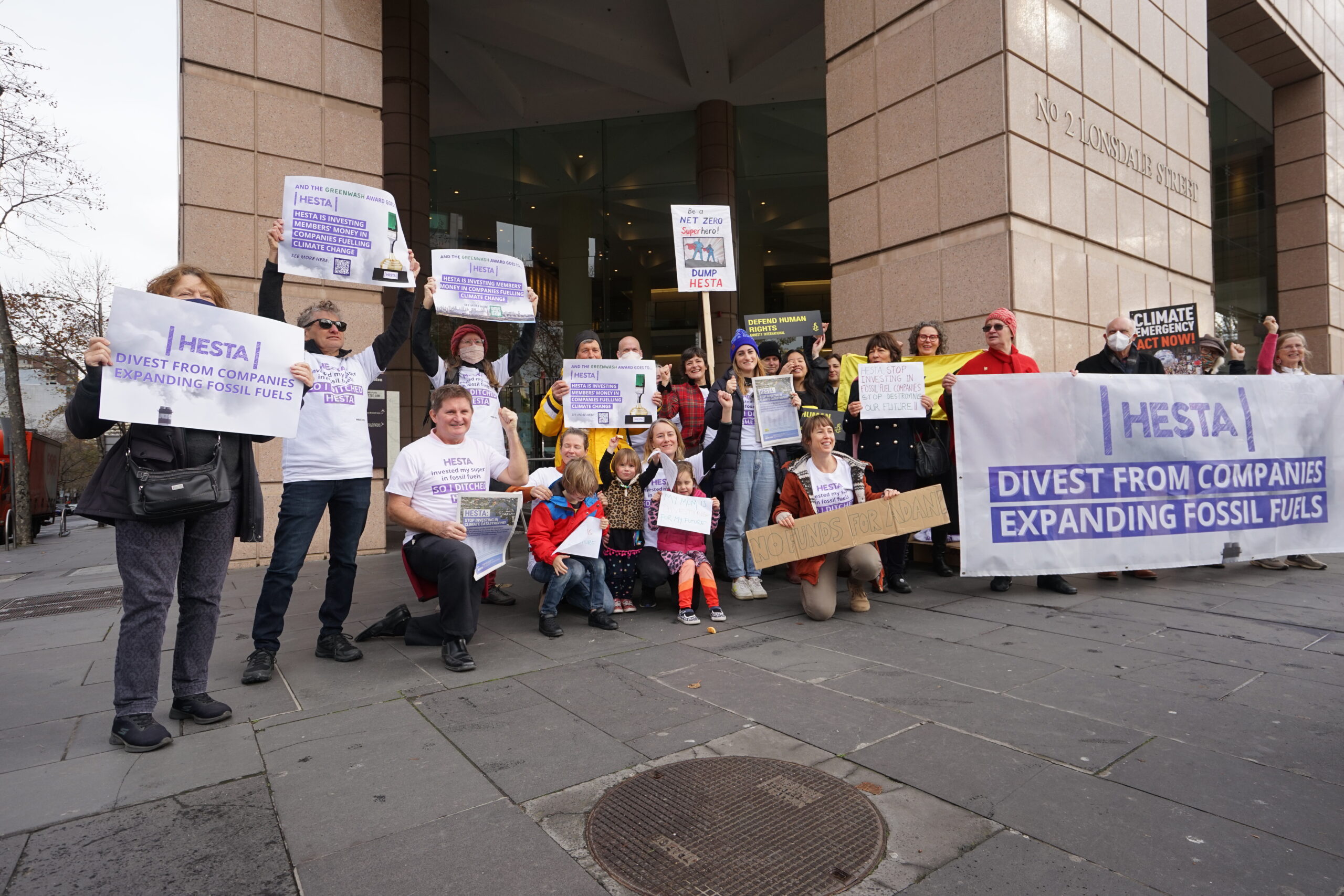
HESTA members taking action outside their fund’s Melbourne office in 2022.
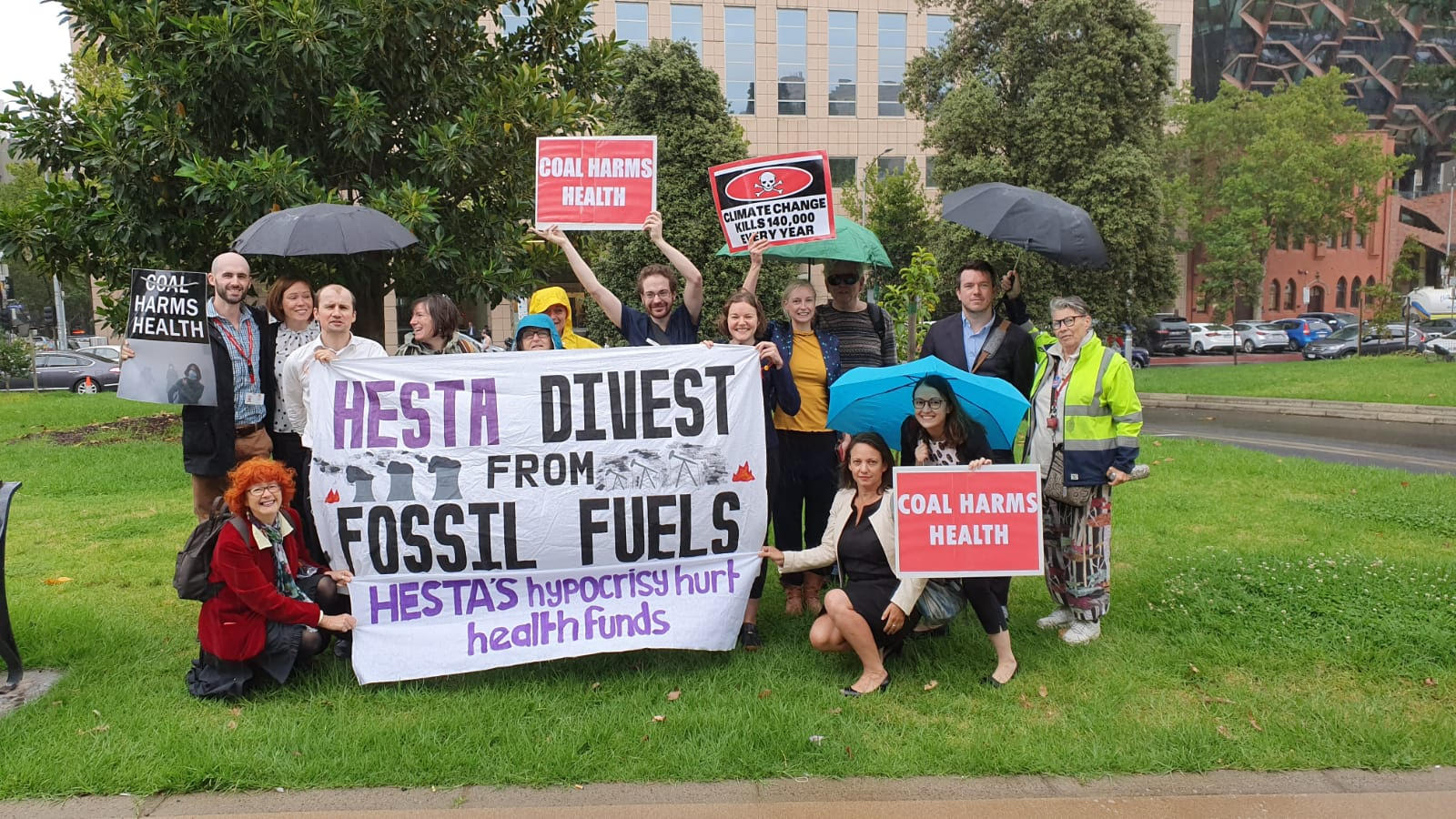
Healthcare professionals taking action outside HESTA’s Melbourne office in 2020. Image credit: Healthy Futures.
HESTA campaign news
Disclaimer
The information provided by Market Forces does not constitute financial advice. The information is presented in order to inform people motivated by environmental concerns and take actions based on those concerns. Market Forces is organising data for environmental ends.
The information and actions provided by Market Forces do not account for any individual’s personal objectives, financial situation or needs. It should not be used, relied upon, or treated as a substitute for specific professional advice.
Market Forces recommends all users obtain their own independent professional advice before making any decision relating to their particular requirements or circumstances. Switching super funds may have unintended financial consequences.
For more information about Market Forces, please visit the about page of the site.
Join us
Subscribe for email updates: be part of the movement taking action to protect our climate.